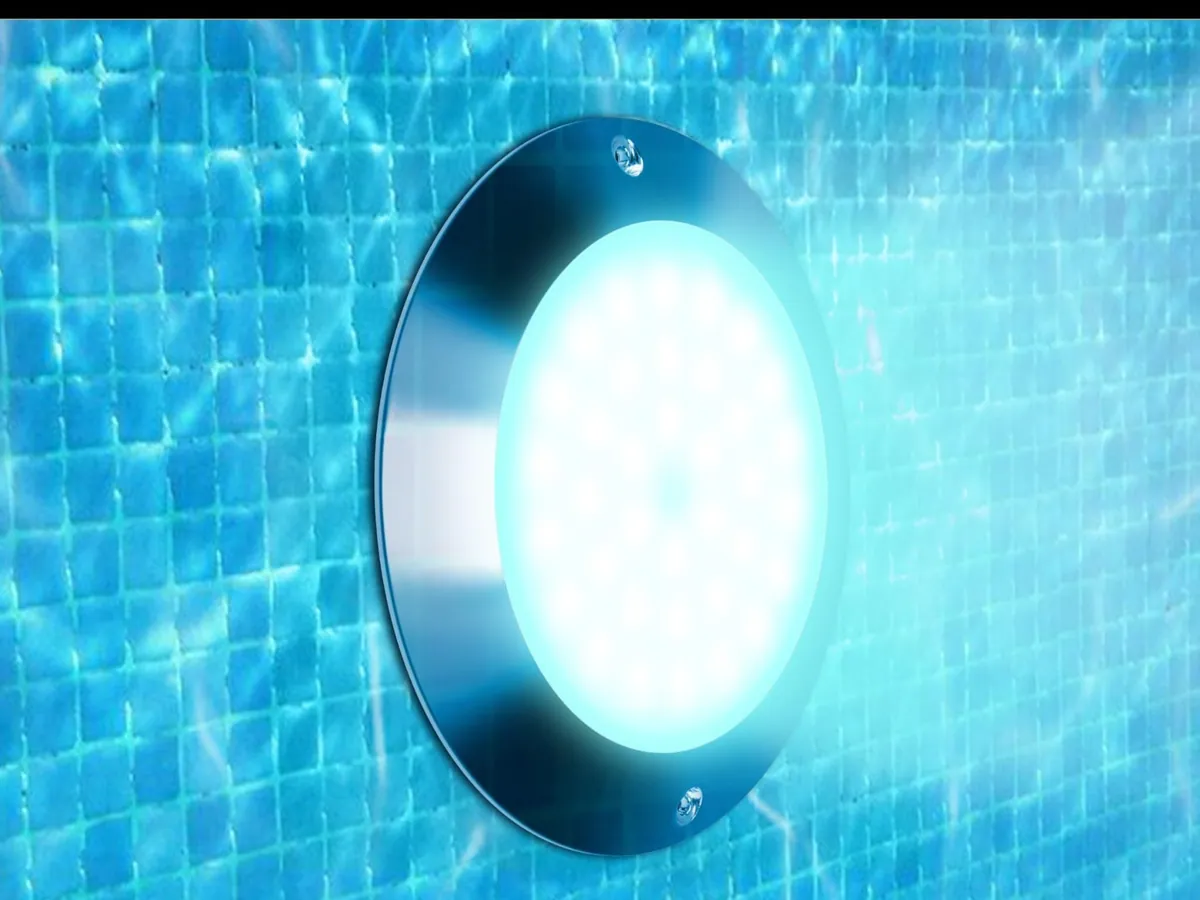
Night fishing with a light is old practice. Commercial boats hung lamps over the side long before LEDs. What has changed is the lamp: a sealed green tube that draws little power and goes under the surface, where the light is not wasted on the air.
The choices are few: the power source, the strength of the light and the length of the cord. One subject deserves more care than the rest, and that is electricity near water.
How a light gathers fish
The idea is a food chain. Light in dark water draws plankton, the small drifting life that many baitfish eat. The baitfish come for the plankton, and larger fish come for the bait. You fish the edge of the glow, where the hunters wait.
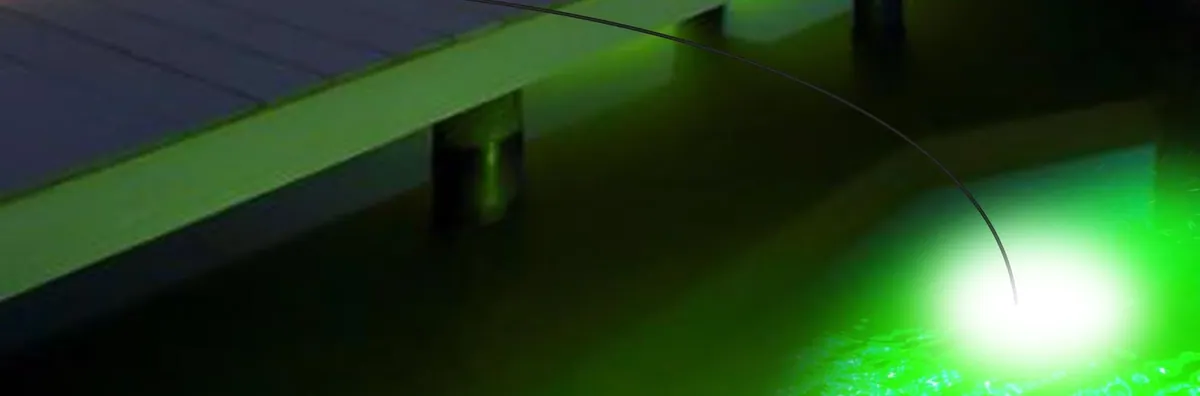
We will be straight about the evidence. Anglers and light makers have watched this happen for decades, and formal studies of it are few. No light puts fish in a place where there are none. A light concentrates what is already in the area.
Why the light is green
Water swallows light quickly, and it does not swallow all colours at the same rate. Red goes first. Green and blue carry farthest, and deep water looks blue-green for that reason. A green lamp gives you the widest lit volume for each watt.
Sunlight entering the water may travel about 1,000 meters into the ocean under the right conditions, but there is rarely any significant light beyond 200 meters.
That figure is for the sun over clear ocean. A lamp in a muddy river lights a few feet. One buyer of our tube light fished Galveston Bay and reported about 6 feet of reach in murky water. Clarity sets the range more than the lamp does.
All of our fishing lights are green only. One buyer wished for a white one, and the range has none.
Choose by your power source
The first choice is not brightness. It is what you can plug into. A dock usually has a 110 V outlet. A boat, a kayak or a remote bank has a 12 V battery. The light has to match.
| 12 V battery | 110 V outlet | |
|---|---|---|
| Where it works | Boats, kayaks, banks, piers with no power | Docks and piers with an outlet |
| Connects with | Battery clamps or a lighter socket | A plug with ground-fault protection |
| Our strongest light | 400 W folding light | 800 W tube light |
| Cord on our lights | 50 ft | 50 or 100 ft |
| Watch for | Battery drain over a long night | The state of the dock wiring |
| Better choice when | You move from spot to spot | You fish the same dock all season |
If you do both, the Dual-Power 200 W Fishing Light saves you buying twice. It ships with a transformer for 110 to 265 V and with battery clips and a lighter-socket adapter for 12 V.
Every Goldlife fishing light in one table
Here is the full set with current prices. Watts and lumens are the figures from the product details.
| Light | Power | Light output | Supply | Cord | Price |
|---|---|---|---|---|---|
| Tube light, 200 W | 200 W | 20,000 lm | 12 V battery | 50 ft | $139.93 |
| Tube light, 400 W | 400 W | 40,000 lm | 110 V outlet | 100 ft | $159.95 |
| Tube light, 800 W | 800 W | 80,000 lm | 110 V outlet | 100 ft | $229.99 |
| Folding light, 12 V | 400 W | 40,000 lm | 12 V battery | 50 ft | $159.95 |
| Folding light, 110 V | 400 W | 40,000 lm | 110 V outlet | 50 ft | $249.99 |
| Dual-power light | 200 W | 20,000 lm | 110 V outlet or 12 V battery | With transformer and clips | $159.95 |
A buyer of the folding light doubts its 40,000 lumen figure and still calls it brighter than most. We have no independent test to show you. Compare our lights with each other by these numbers, and judge them against other makes by what buyers report.
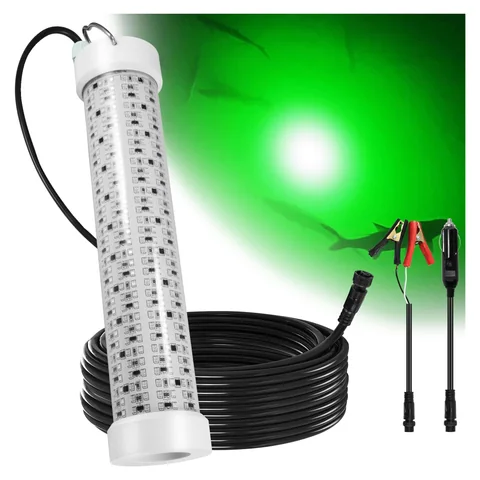 Green Underwater Fishing LightGreen LED · IP69K · $139.93
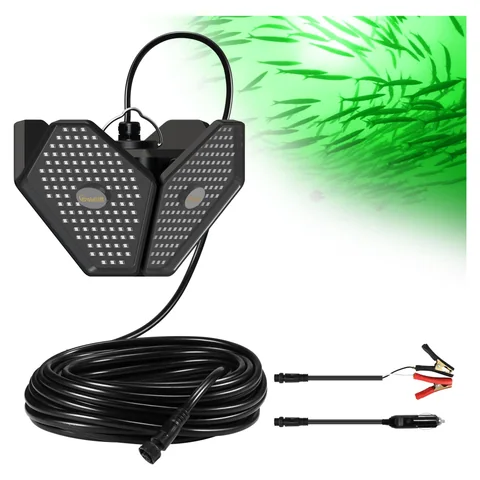 Foldable 400 W Fishing Light400 W · green LED · IP69K · $159.95
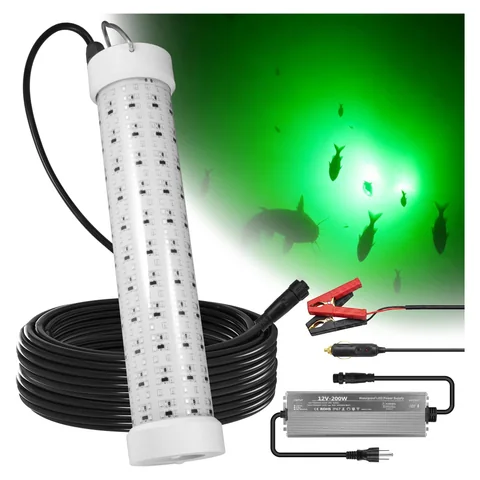 Dual-Power 200 W Fishing Light200 W · 12 in · IP69K · $159.95
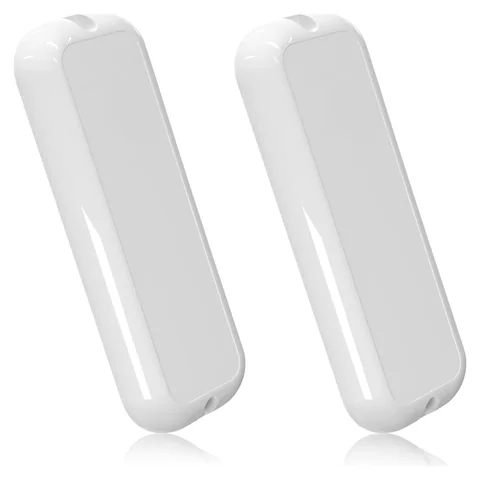 B5 Underwater Boat LightsPair · 12 V · 0.6 in thin · $34.99
How much light is enough
More light is not always better. In clear, shallow water a strong lamp can light the bottom like a stage, and wary fish hang far back. One buyer of our tube light marked it down for being too bright for the spot.
- Clear water under 10 feet: 200 W is plenty.
- Stained water, or 10 to 20 feet under the dock: 400 W.
- Deep or muddy water, or a wide basin you want to light across: 800 W.
Those are starting points from what buyers tell us, not a rule. If you are unsure, the folding light gives you a way to turn the output down without a dimmer: close the panels and the lit area shrinks.
Battery arithmetic for a 12 V night
Green Underwater Fishing LightGreen LED · IP69K · $139.93Foldable 400 W Fishing Light400 W · green LED · IP69K · $159.95Dual-Power 200 W Fishing Light200 W · 12 in · IP69K · $159.95B5 Underwater Boat LightsPair · 12 V · 0.6 in thin · $34.99A 12 V light runs from the same kind of battery as a trolling motor. Divide the watts by 12 to get the amps it draws. Then divide the battery's amp-hours by that figure for a rough run time.
| Light | Amps at 12 V | Hours from 100 Ah, used to half |
|---|---|---|
| 200 W | 16.7 | 3.0 |
| 400 W | 33.3 | 1.5 |
The table assumes you use half of a 100 amp-hour battery, which is a common limit for lead-acid types. Read the label on your own battery. A 400 W light is a heavy load, and a small starting battery is the wrong supply for it.
Setting up on a dock
A dock setup is the simplest. The work is in the first night, and after that the light can stay rigged.
- 1
Check the outlet
Use an outlet with ground-fault protection. Press its test button before you plug anything in.
- 2
Pick the spot
Choose the down-current corner of the dock, over the deepest water you can reach.
- 3
Set the depth
Lower the light until it hangs 2 to 4 feet under the surface, clear of the bottom.
- 4
Tie it off
Tie the cord to a cleat or a post so the weight hangs on the knot and not on the plug.
- 5
Wait in the dark
Switch off deck lamps that spill onto the water. They scatter the bait.
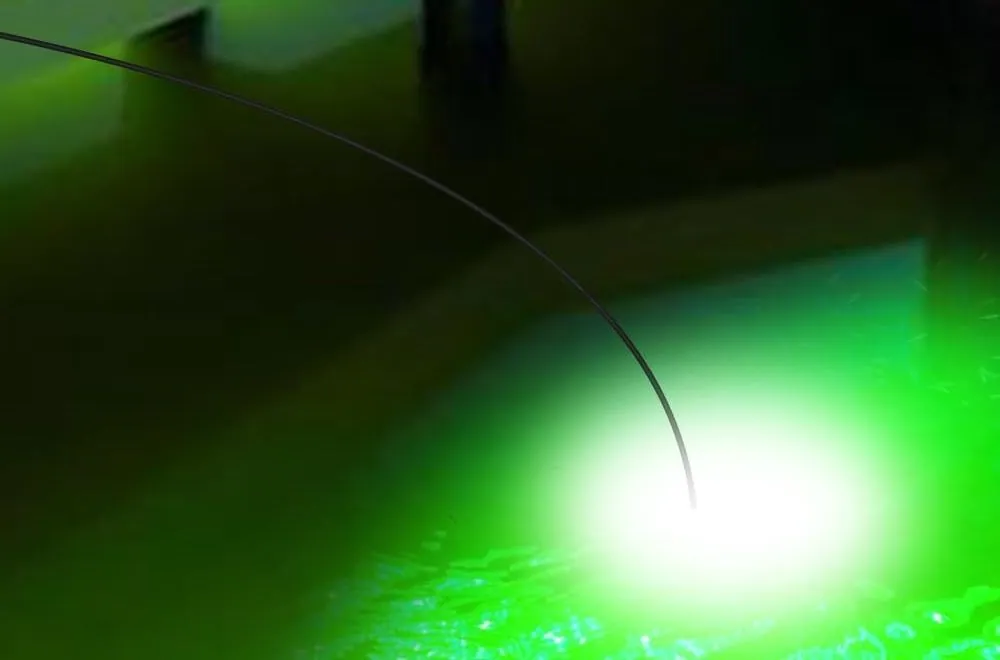
Setting up from a boat
From a boat you anchor first and light second. A drifting boat drags the glow away from the bait it has gathered.
- 1
Anchor up
Set the anchor and let the boat settle before the light goes in.
- 2
Connect at the battery
Clip red to positive and black to negative, or use the lighter-socket adapter.
- 3
Lower from the stern
Let the light down on the side away from the anchor line.
- 4
Hook it
Use the stainless steel hook on the light to hang it from a cleat, so it cannot slip away.
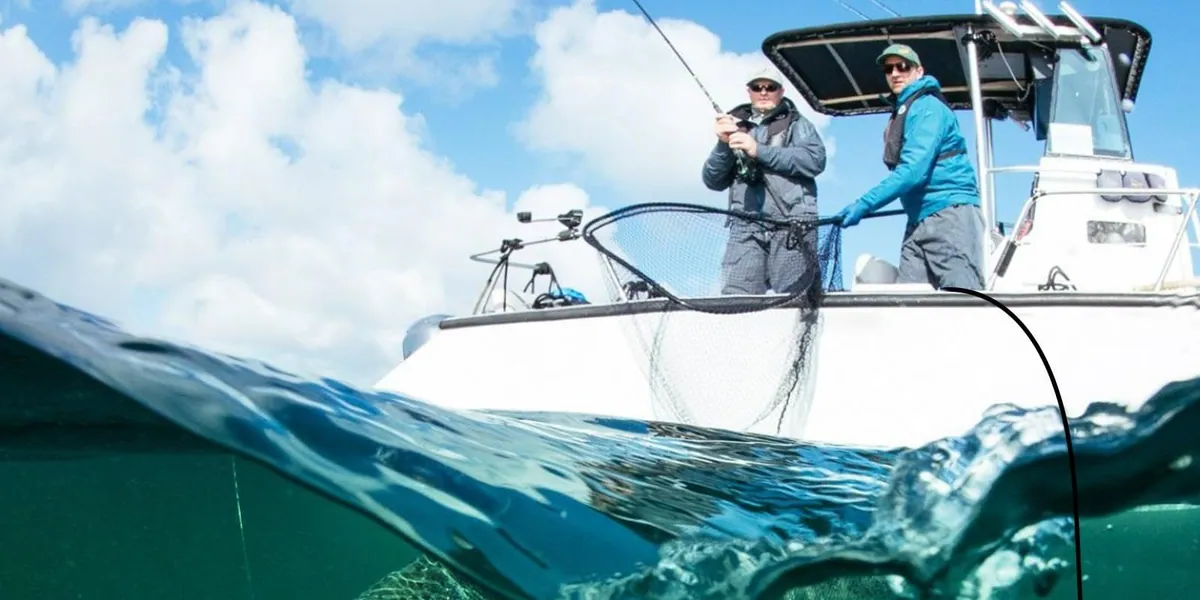
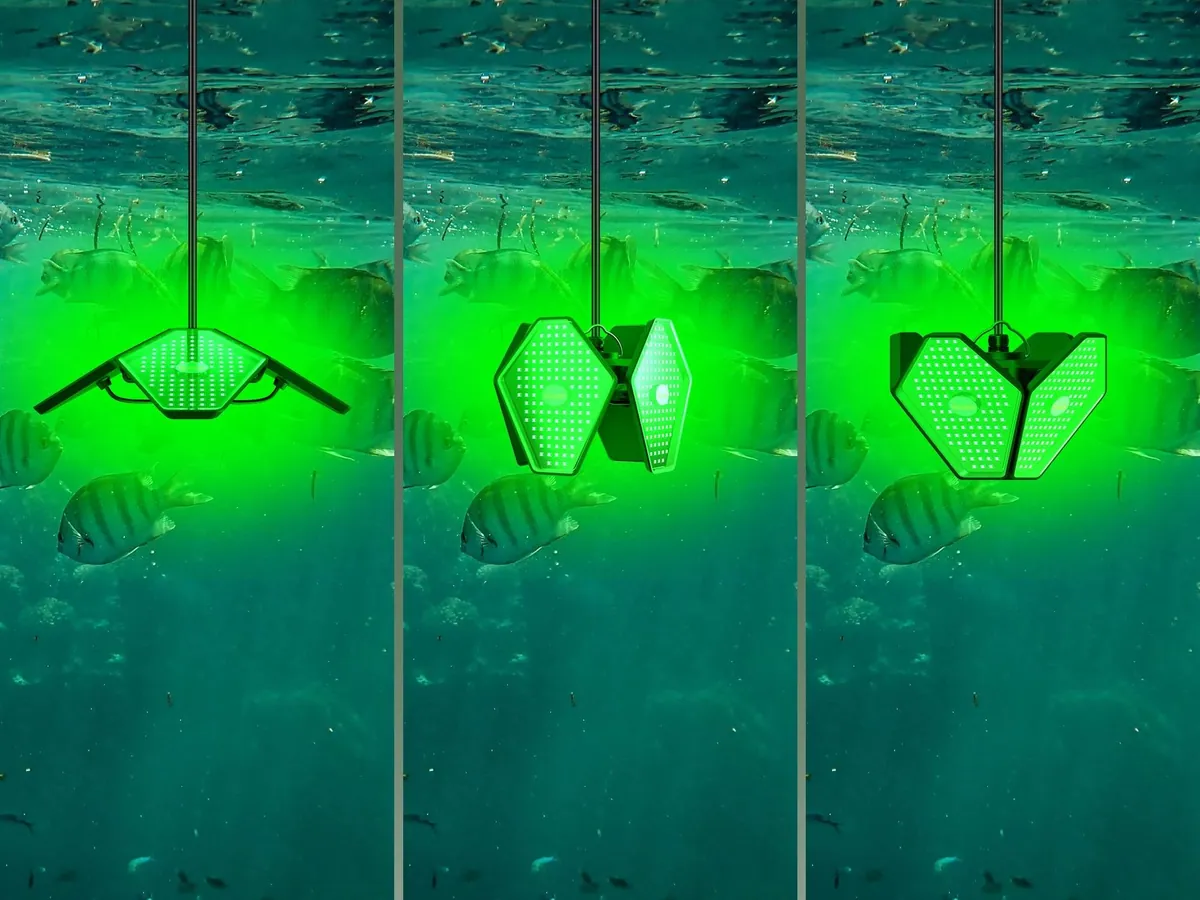
The folding light: three shapes
The Foldable 400 W Fishing Light has hinged panels. The shape you set changes where the 400 W goes.
| Position | Light goes | Use it for |
|---|---|---|
| Open flat | Down and out in a wide pool | Shallow flats and the area under a dock |
| Half closed | Out in a cone | A channel edge or a drop-off to one side |
| Closed into a block | All round, in a tight ball | Deep water straight below the boat |
Three buyers of this light report that it stopped working within weeks. Others have run it without trouble and rate it highly. Both accounts are true, and the reviews deserve as close a reading as the product details.
Hull lights are a different tool
B5 Underwater Boat Lights do not hang on a cord. A pair screws to the transom and lights the water behind the boat. Each light is 0.6 inches thin, draws 30 W on 12 V and gives 3,000 lumens.
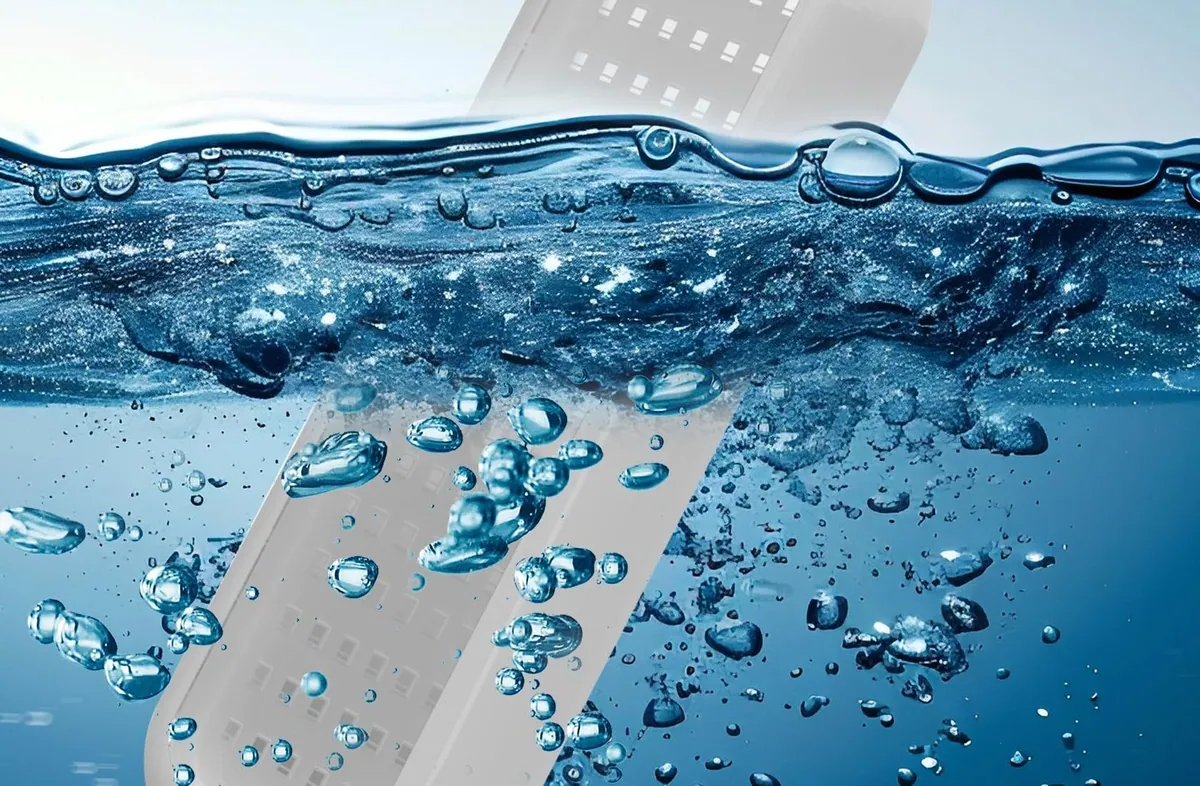
They draw bait at anchor in the same way, on a smaller scale, and they double as courtesy lights at the dock. Buyers found the wires short for a run through the bilge, and several bedded the lights in marine sealant as well as the gasket.
Each B5 needs its own fused feed. Two lights at 30 W draw 5 amps together on 12 V. One buyer fitted 4 and warns that they add up to 10 amps, more than a spare accessory circuit may carry.
Salt, weed and the 15-day rule
A light that lives in the water grows a coat. Algae, then slime, then barnacles in salt water. The coat blocks light and holds heat against the lens.
- Lift the light every 15 days of constant use.
- Wipe it with a soft cloth while the growth is still soft.
- Rinse with fresh water after every salt-water trip.
- Dry it before it goes into the storage bag.
Green Underwater Fishing LightGreen LED · IP69K · $139.93Foldable 400 W Fishing Light400 W · green LED · IP69K · $159.95Dual-Power 200 W Fishing Light200 W · 12 in · IP69K · $159.95B5 Underwater Boat LightsPair · 12 V · 0.6 in thin · $34.99Barnacles are the reason for the 15 days. Once they cement on, they do not wipe off, and scraping scratches the tube. A buyer who rinsed the light after a pier trip in salt water says it still looked new.
Electricity and water
This is the section to read twice. A 110 V light puts mains power on a cord that ends in the water people swim in. The danger is not the light. It is any fault in the dock wiring, in a cord, or in a boat plugged into shore power.
Electric shock drowning (ESD) can occur when electrical systems at marinas, private docks, or on vessels leak current into the water.
There is no visible warning to electrified water.
Our 110 V lights carry a GFCI plug, which cuts the power when it senses a leak. Treat it as the last line and not the only one. Two buyers report that the plug failed early. One of them cut it off and wired the light straight to an outlet, and we ask you not to copy that.
Docks should have ground fault circuit interrupter (GFCI) breakers on the circuits feeding electricity to the dock.
Electrical installations should be performed by a professional electrician familiar with marine codes and standards, and inspected at least once a year.
The rule for people is simpler than the rule for wiring. Nobody swims near a dock with power on it, and nobody goes into the water to adjust a light that is plugged in. Unplug first, then reach.
Never swim near a marina, dock, or boatyard.
As little as 10 milliamps, 1/50th the amount used by a 60-watt light bulb, can cause paralysis and drowning.
A 12 V light does not carry that mains risk, which is one more reason boat anglers prefer it. A battery can still start a fire through a short circuit, so keep the clamps clean, tight and apart.
A first night, step by step
The first night teaches more than any guide. Go in with a plan and a watch, and write down what happened and when. A pattern shows after 3 or 4 nights at the same spot.
- 1
Dusk
Rig the light and tie it off while you can still see your knots. Leave it switched off.
- 2
Full dark
Switch on. Note the time. Keep the deck dark and your voice down.
- 3
After 15 minutes
Look for a haze in the glow and for small flashes at its edge. That is the bait arriving.
- 4
After 30 to 45 minutes
Start casting past the glow. Work the dark rim before you try the bright centre.
- 5
If nothing shows in an hour
Move the light to deeper water or to the other side of the dock, and start the clock again.
Keep the notes. Tide, wind and water colour change the result from one night to the next, and a notebook sorts out which of them mattered at your dock. Our light does the same job on a slow night as on a good one, and the notebook is how you learn the difference.
What comes in each box
The cartons differ by power source. Check the list for the version you order, because the 12 V leads are not in the 110 V box and the reverse.
| Light | In the box |
|---|---|
| Green Underwater Fishing Light | Light with cord, battery clamps and lighter-socket adapter (12 V), storage bag |
| Foldable 400 W Fishing Light | Light with cord, battery clamps and lighter-socket adapter (12 V), storage bag |
| Dual-Power 200 W Fishing Light | Light with cord, 110 to 265 V transformer, 12 V battery clips, lighter-socket adapter |
None of the lights comes with a battery or an extension lead. The 12 V tube light needs a 12 V supply of your own, and the product details say so plainly. A buyer who had not expected the lighter-socket adapter was pleased to find it next to the battery clamps.
Cord care and storage
The cord is half of the product. It carries the weight of the light, and it is the part that gets stepped on, shut in hatches and dragged over barnacles.
- Coil it in wide loops, never around your elbow.
- Keep the plug or the clamps out of the bilge and off a wet dock.
- Check the jacket for cuts before every trip, and retire a cord that shows copper.
- Store the dry light in its bag, away from sun.
Buyers describe the cord on our tube light as heavy duty. Treat it well and it stays that way.
Five mistakes we hear about
Green Underwater Fishing LightGreen LED · IP69K · $139.93Foldable 400 W Fishing Light400 W · green LED · IP69K · $159.95Dual-Power 200 W Fishing Light200 W · 12 in · IP69K · $159.95B5 Underwater Boat LightsPair · 12 V · 0.6 in thin · $34.99- Leaving deck lights on, so the bait has no reason to gather at one spot.
- Resting the light on the bottom, where mud hides it.
- Running a 400 W light from a small starting battery.
- Fishing the bright centre and ignoring the dark rim.
- Leaving the light in salt water for a month without lifting it.
Each of these comes from a buyer's account or from a question sent to us. None of them is the fault of the fish.
Local rules
Rules on fishing with lights differ by state, by species and sometimes by lake. Check with your state wildlife agency before the first night. A dock in a managed community may have its own rules on lights left on overnight.
What buyers say about the fishing lights
Green Underwater Fishing LightGreen LED · IP69K · $139.93Foldable 400 W Fishing Light400 W · green LED · IP69K · $159.95Dual-Power 200 W Fishing Light200 W · 12 in · IP69K · $159.95B5 Underwater Boat LightsPair · 12 V · 0.6 in thin · $34.99Buyer ratings stand at 3.8 from 101 ratings for the green fishing light, 4.0 from 55 ratings for the foldable fishing light and 3.6 from 29 ratings for the dual-power fishing light. The praise is about brightness and the heavy cord. The complaints are about lights or plugs that failed early.
Very bright
Very bright. Pierced through about 6' of murky Galveston water. We could see fish run through the light early AM. Heavy duty cord.
Good but gfci failed
Works great. Very bright. Had to cut the GFCI plug off and wire in to a receptacle after a few uses.
Great buy
I've been using this for a couple months now and I will tell you that it is the brightest green light on the water. Reliable, no problem so far.
Questions about fishing lights
How deep should an underwater fishing light hang?
Hang it 2 to 4 feet under the surface, clear of the bottom. Our lights are rated to 100 ft, so the limit is the cord and the clarity of the water.
Can a green fishing light run from a car battery?
Yes, a 12 V light can. A 200 W light draws about 17 amps, so a 100 Ah battery used to half gives roughly 3 hours.
How often should a fishing light be cleaned?
Every 15 days if it stays in the water, and after each trip in salt water. Growth blocks the light, and barnacles are hard to remove once set.
- The lineGoldlife fishing and boat lights
- Water notesPond fountain or aerator: how to choose
- Water notesChoosing a 12 V LED pool light
Sources
- NOAA National Ocean Service, How far does light travel in the ocean?, read 8 October 2026
- National Fire Protection Association, Protect Yourself from Electric Shock Drowning, read 8 October 2026
- Electrical Safety Foundation International, Electric Shock Drowning: Unknown Danger Lurking in the Water, read 8 October 2026
- Safe Electricity, Prevent Deadly Shocks Around Boats and Docks, read 8 October 2026
This note is general information. It is not electrical advice for your dock or boat, and it does not replace your state's fishing regulations.